Lille
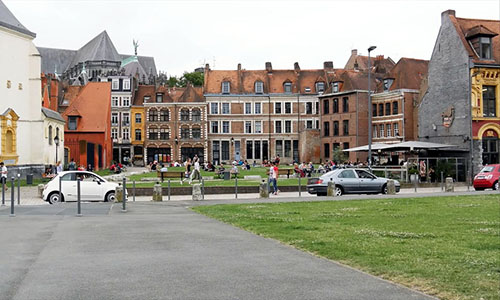
Lille is a city in the Northern France that has a reputation of an industrial center with fairytale historical core. Lille is a historical capital of Flanders that has a lot of Flemish influence. Old town is famous for it's architecture and many baroque style buildings with sharp rooftops and lavish mansions of the 19th century. Lille is one of the biggest French cities with dynamic urban life, peculiar sights and great museums second only to museums of Paris.
Geography and climate
Lille is located in the north of France on the left bank of the river Del 14 km from the border with Belgium and 200 km from Paris. The climate is temperate marine with warm summers and cool winters.
Geography and climate
Lille is located in the north of France on the left bank of the river Del 14 km from the border with Belgium and 200 km from Paris. The climate is temperate marine with warm summers and cool winters.

General information
History and facts
Already in the Middle Ages on the left bank of the river Del there was a small settlement. The village was simply called l'île which translates as "island." In the 11th century the Flemings built fortifications against the Normans. From that time Lille began to develop intensively under the rule of Flanders. A few decades later the city withstands the siege of the French. Lille reached its peak in the late 12th century but subsequent wars with France stopped its prosperity. In the early 13th century the French king Philip II Augustus seized and burned the city several times.
At the end of the 13th century a new war was declared between Flanders and France. It resulted in a series of military conflicts during which the city changed hands several times. In the 15th - 16th centuries Lille again began to develop dynamically and was one of the most important cities in the region. The city was famous for its lace and was a big shopping center. In 1668 Lille became part of the French kingdom.
From 1708 to 1713 Lille was owned by the Austrians. In the 19th century it continued to develop as an industrial and commercial city. In 1890 Charles de Gaulle was born here.
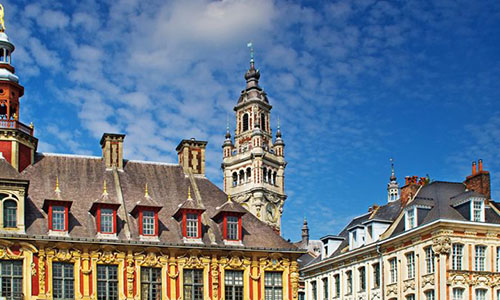
The Town Hall is a grand Art Deco building built between 1924 and 1932. The main feature of the town hall is the tall 104-meter tower which was included in the UNESCO World Heritage List in 2005.
On the south side of the square is an old 17th-century exchange that is exemplary of the Flemish Baroque style. The Exchange consists of 24 buildings surrounding the Renaissance
At the end of the 13th century a new war was declared between Flanders and France. It resulted in a series of military conflicts during which the city changed hands several times. In the 15th - 16th centuries Lille again began to develop dynamically and was one of the most important cities in the region. The city was famous for its lace and was a big shopping center. In 1668 Lille became part of the French kingdom.
From 1708 to 1713 Lille was owned by the Austrians. In the 19th century it continued to develop as an industrial and commercial city. In 1890 Charles de Gaulle was born here.
The Town Hall is a grand Art Deco building built between 1924 and 1932. The main feature of the town hall is the tall 104-meter tower which was included in the UNESCO World Heritage List in 2005.
On the south side of the square is an old 17th-century exchange that is exemplary of the Flemish Baroque style. The Exchange consists of 24 buildings surrounding the Renaissance
Population: 230,000
Area: 35 km2
Language: French
Currency: Euro
Visa: Schengen
Time zone: UTC+1
Tips usually included in the bill
Convenience stores work from 9am to 5pm
Restaurants serve after 7pm
Area: 35 km2
Language: French
Currency: Euro
Visa: Schengen
Time zone: UTC+1
Tips usually included in the bill
Convenience stores work from 9am to 5pm
Restaurants serve after 7pm
Transportation
The closest international airports are Charles de Gaulle Paris and Charleroi Brussels. Lille is connected by high-speed trains to Paris, Lyon, Marseille and Strasbourg. Lille has two branches of an automated subway that connects the center to the suburbs.